Seamless, 2005
I was hoping for another September Issue when I brought this film up to watch. I wanted a story where you fall in love with characters and out of love with them in the same instance. Instead, this was a story about reality, long working hours and the business dealings that weigh on personal lives. Not a feel good movie by any stretch, but honest and unremitting in its details. The beauty, and at the same time tragedy, that is softly displayed in this film is that of the intimate connection of the life of fashion and the daily life of those who make it.
Dismayed within the first fifteen-minutes, I actually stopped after about twenty-minutes because I was so frustrated by the poor image quality. I've come to expect HD SLR quality documentaries these days. This appears to be shot with a 15 year old DV Handicam, or a cell-phone. The video had poor color depth, nearly no resolution and was often out of focus.
On the other hand, what the film lacked in image quality it made up for in sound. I will confess that I am a bit of a sound nerd. While this was no audiophile porn, the sound is really dynamite. It is one of the times when you don't only notice the dialog and sound, but are grateful for it. I would have to say that the capturing of some very intimate moments makes up for the lack of quality video.
Bottom line, this film really makes one imagine what it means when we think about our public image. Especially our public image as seen through fashion and the people who create it. Because we see who we often understand our own identity through the terms of someone who has already decided what it should be, it is helpful to see the real lives and issues those identity creators have. It is also nice to be reminded now and then that there are actual working craftspeople who are behind the things we wear. And they have families, long sleepless nights and have worked their butts off to get where they are. Those are things which resonate with me and make this film worth seeing.
I like to watch documentaries. Moving images combined with sound and story. Although there is truth in any form of storytelling, there is an erie truth in documentary. On the surface it exposes what we are as humans, but deeper it exposes the philosophical questions about what we are as individuals, communities, and nations. There might well be sentence fragments and for that I apologize.
Wednesday, July 27, 2011
Thursday, July 14, 2011
The Mini-Documentary
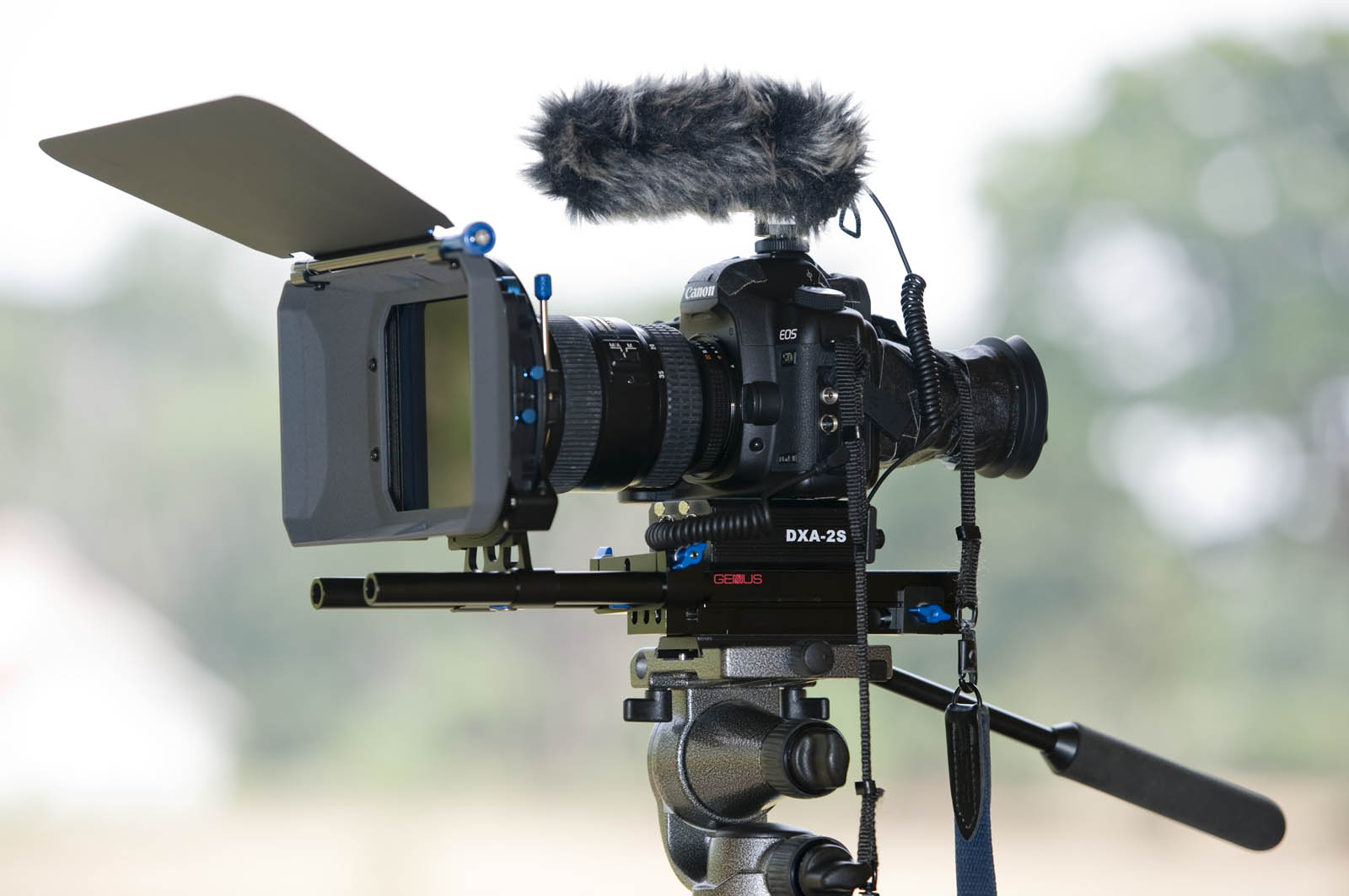
| 5D MKII |
The mini-documentary.
I started this by writing about the ubiquity of HD SLR and quick video portrait vignettes. All of that is old news. We all know you can shoot a documentary on a 5d MKII and as easily make it ready for Vimeo or Front Line in the same number of keystrokes. My wonder is, what does the ubiquity of the motion oriented story telling medium do for our identity within a globalized community? Is there something broader and more honest about pairing a short bit of one persons story with images and often music which is paired with it to create a specific mood. I first thought to myself, what is the difference between short documentary portrait and a news segment. Both are produced; both short; both information about contemporary issues. Then it occurred to me, if the purpose of documentary as a story telling medium, is to reflect who we are, and then help define who we can become, the nightly news does not do any such thing.
The historian in me looks at any form of story telling as a cultural artifact that reveals a modicum of truth about the world in which we live right now. Not truth with a capital T, but rather truth as interpreted and read into a work. In the introduction to Virtue, Commerce and History J.G.A. Pocock explores the role of texts as an interpretive community in which the truth lives as fleeting and changing as the truth of opinions. Each text takes on its own truth based on its constituents. To me that notion has truth with a capital T. Each perspective that is expressed in a documentary, whether opinion, fact, reinterpretation of truth, etc., carries its own honesty and within its own self is true. What makes this interpretive structure even more complicated within the realm of documentary is that we are dealing with not only words but images: exposure, frame rates, lighting; sound: voice overs, non-diegetic sound, ambient noise, music choices. Each of these aspects combines to create an emotional connection with the viewer and deepen the interpretive community in which that film, as a text, lives. So do we as humans live in a world in which the new mini-documentary is a place which reflects who we are, and what we can be? Each time I open up Vimeo I'd like to think so.
Wednesday, July 13, 2011
Visual Acoustics: Time, Utility and Architectural Photography
Visual Acoustics: The Modernism of Julius Shulman, 2008
My grandfather was born in 1916. He put himself through college taking photos and winning contests with them. He started his post-college mid-war career as an engineer. Working in the Kaiser shipyards in Portland, Oregon he managed to narrowly avoid the draft. After the war he became an architect. Working for himself and with a partner for most of his life. Modernism filled his age. Eames chairs filled his office, or so my mother says. Utility and function met life in his buildings. I have always admired his attention to utility mixed with beauty. My photography and life philosophy are very much inherited from his archetype. Because of this I have found that my attraction to “mid-century modern” architecture has only gotten stronger as I get older.
I have never used a large format camera, unfortunately. But there is a beauty about watching an expert define the motion of film plane in order to bring the lines of an image into symmetry. This was the expert realm of Julius Schulman.
Exploring the world of modern architecture from the immediate post-war years up until the 1970s Shulman defined the mid-century modern style. From architecture to furniture his images epitomized the southern California modernist aesthetic. Visual Acoustics accounts his life's work in a series of vignettes which comprise of an overview of modernism, the rise of the aesthetic on an international scale, his blossoming into the globe's preeminent architectural photographer, and finally into his retirement work with environmental and educational groups.
The interesting philosophical issues which arise out of this documentary are the role of the unification of utility and beauty; the need for a state sponsored emphasis on appropriate land-use policies; and how images of a piece of architecture can not only a movement, but that movement's incorporation of physical space into a philosophical ideal.
Of particular interest to me was the often referenced use of light within these structures. Many modernist architects felt that harmony with nature was crucial to the realization of full utility in which function would define the form of the space. In this way, natural light was often used to ensure that lightbulbs and lamps were only necessary at points of full darkness. Recognition of how a space, especially a domestic one, interacted with the movement of the sun across the horizon was of prime importance. Philosophically, Shulman saw this as the connection between time and space. The movement of the sun defines the movement of time. Even though a single space can be present in various forms throughout its life, the shifting of rays of light from east to west remain as a reminder of the constant procession of time.
The images that Shulman produced in his lifetime were, needless to say, beautiful. Finally I recognized the man behind the images of Brasilia that have captured my imagination since I was a child. Black and white stills with a single vanishing point. Converging lines drawing the eye in. It is remarked by Tom Ford that Shulman was often able to create a more beautiful space in his images than was actually present in the buildings themselves. Playing with light and exposure, dodging the edges of prints, dark red filters, and tilted planes all add up to beautiful and age defining photographs.
The vignette nature of the film means that each piece feels a bit disjointed from the others. Flowing well with the story each section matches nicely, and is coherent. Unfortunately the visual aspects of some of the vignettes appear to be the machinations of a digital video infatuated high-schooler. I remember turning my video black and white, adding grain, and jacking up the contrast for effect. Unfortunately in a film so filled with beautiful images these ploys detract from the overall attractiveness of the movie.
Bad video effects aside, this film raising some serious questions about how we understand who we are. Like much of the design genre it is nice to recognize that we are not who we are simply because we are. Rather we are who we are because someone made an image, maybe not even a fully naturally honest one, to tell us what it means to be a modernist. The clean lines of a single still image might betray the truth of a structure. Although perhaps the clean lines of an image illustrate the truth of physical space better than an architect and observer could ever appreciate. Shulman's images are modernism. Utility and space unite a beautiful function. I think it is a film that my grandfather would appreciate.
Art & Copy, Advertising isn't the Evil Empire After All
Art & Copy, 2009.
A really lovely film in which the question of, what does advertising mean in American, and how has it changed out lives is fleshed out through the eyes of those creating it. The film intersperses statistics about the number of hours television a day the average household takes in, how many commercial satellites are in orbit to provide all that television, and comparisons of the amount of advertising that the average urban dweller consumed in 1970 versus today. The film runs the gamut of major advertisers from Hal Riney to Wieden-Kennedy to Doyle-Dane-Bernbach. Each with their own personality and their own unique approach to connecting a product with a message to reach an individual.
Like most films in the genre of design and creative culture, this one turns naturally to philosophical questions of purpose. The issue of what it means to be a consumer of advertising is breeched with the subtlety of smart sociology, and candor that only inveterate creators of social change have. The film provides the answer that advertising creates a community in which the individual wants to connect with. Or, the person would like to identify their social status with not so much the product, as the other people within that social community.
In addition to the character of advertising the film deals with the identification of the role of television in American life. Wrapping television up with other forms there is also a heavy emphasis on the ever-growing ubiquitous nature of media in the modern world. The fact that advertising does not just sell a product or a life style (VW, Think Small), but creates an emotional connection and gives the consumer a sense of empowerment (Nike, Just Do It). This empowerment is achieved when a likeable human trait, like athleticism and health, works in concert with the goals of a corporate firm. Giving the human trait a face that is likeable on both an emotional level, as well as a financial one.
A recurring theme of many of the interviewees is a sense of fear and lacking. Because of some sort of lacking and fear, the desire to work harder and do something that will astound and surprise people on a grand level is realized through advertising. However this sense of fear is juxtaposed with a sense of love in which the people producing advertising must both love their work, as well as those they work with. This, in return gives the advertising industry a sense of personal connection with reality. In a sense, this gives the corporate identity a point of interaction, positive interaction, with the consumer.
Closing with the words, I think creativity can solve anything, from advertiser George Lois the film gives the sense that advertising is not so much a matter of milking more dollars out of the pocket book of unwitting consumers; rather it is a desire to see social identity and social community work in concert with the capitalist company's desires.
Analytical Purpose of Documentary - is there one?
At age twenty-eight I have photos and videos archived, digital and analog, dating back twenty years. I have had some form of visual capture device in my hands since I was eight. My first camera was a Kodak Instamatic. It took 126 cartridge film, and produced little square images. I have documented my life for a very long time. I rarely look back at my images however. I track my life through the changes and relationships that come in and out life. Like intersections of streams my life is a sedimented history; one bit of river bed is deposited here, another carried there. But in the end I love that twenty years of my life can be seen through images if someone were interested. This documenting of my own life has given me the interest that I now have in documentary films. Watching other people documenting their lives and the lives of others is a fascinating undertaking.
Now, after a bachelors degree, and nearly a masters degree I am in search of doctoral programs. It has been revealing to me to undertake such a step in my life, not so much because I am marking mile-posts, but more so to realize what the world finds worthy of research on an intellectual level. American studies, religious studies, history of art, history of architecture, screen cultures, visual culture, material culture. Academes can make nearly any thing into a study.
One that stuck out to me, not so much as something I am interested in pursuing academically, but would like to maintain as a fact that it is a field is documentary film analysis. What is particularly interesting about this is that there are courses which look at the role of documentary film as an analysis of modern life, or even as a mode of understanding modern life. The role of visual culture as analyzing the way we live inevitably defines the way that we understand ourselves in the future. If documentary film looks at us now, how will that show us how to be in the future? Film as a language takes on the traditions and rhetoric of the public. How is it that the public rhetoric of film is formulated by explosions, undercover missions, and romantic comedy. However the rhetoric of documentary film is an analytical look into lives that we never realized were important. Does documentary film explain who we are, if so it would seem that it has the reflexive necessity of defining who we will become. If fictional narrative analyzes what we imagine and dream, does that in fact reflect what we want to become? How do we narrate the future through images on a Michael Bay scale? More importantly are we defining the future within the realm of what is possible and conceivable now, or are we utilizing the creativity needed to achieve a future that none of us have even thought of. Can documentary film work to expand imagination in the same way that a narrative fiction story can? I would like to think so. Often normal daily activities breed the most creativity. Analysis of who we are as humans gives the philosophical framework to provide a jumping off point for the next big step. Is the world at that jumping off point?
Subscribe to:
Posts (Atom)